650 MW Nuclear Plant Proposed in Virginia, Targeting Early 2030s Operation
10/19/2026 / By Edison Reed
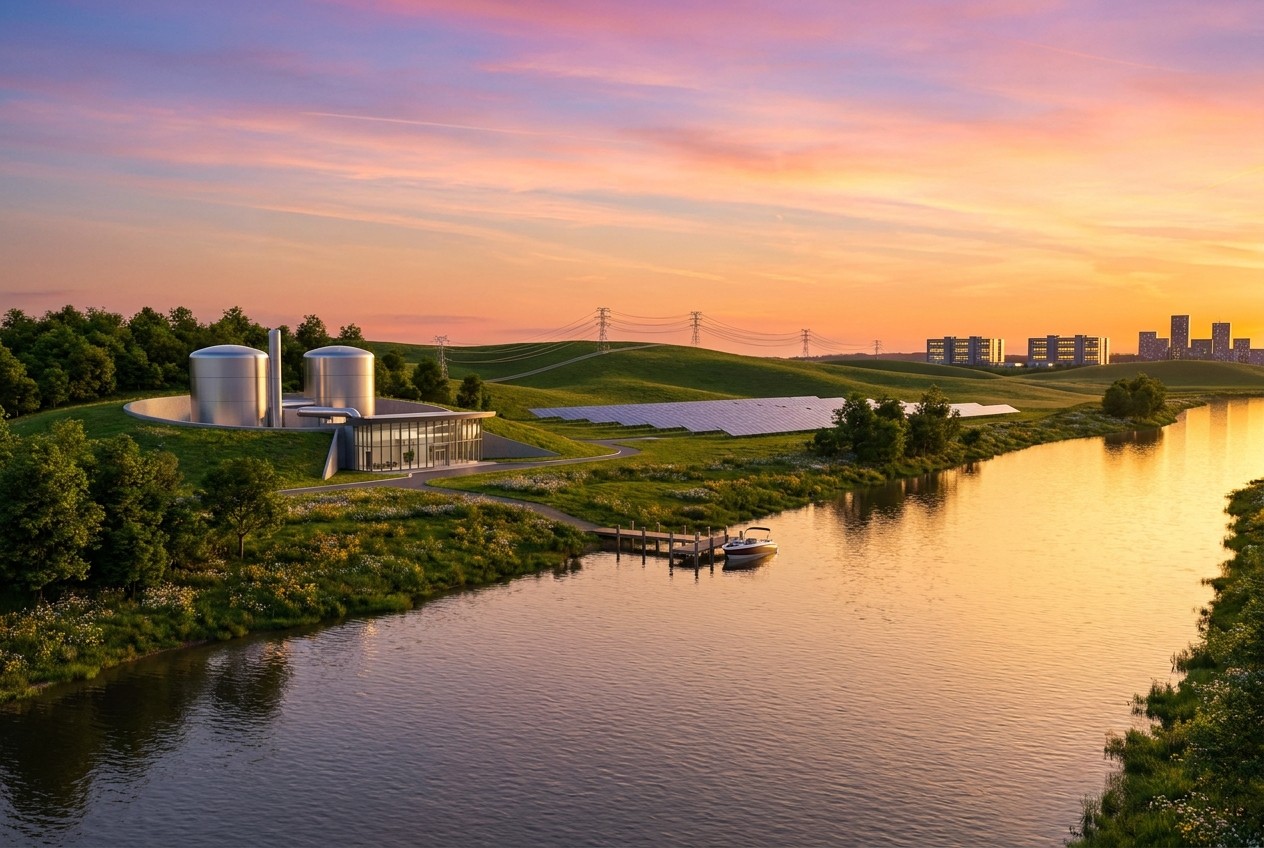
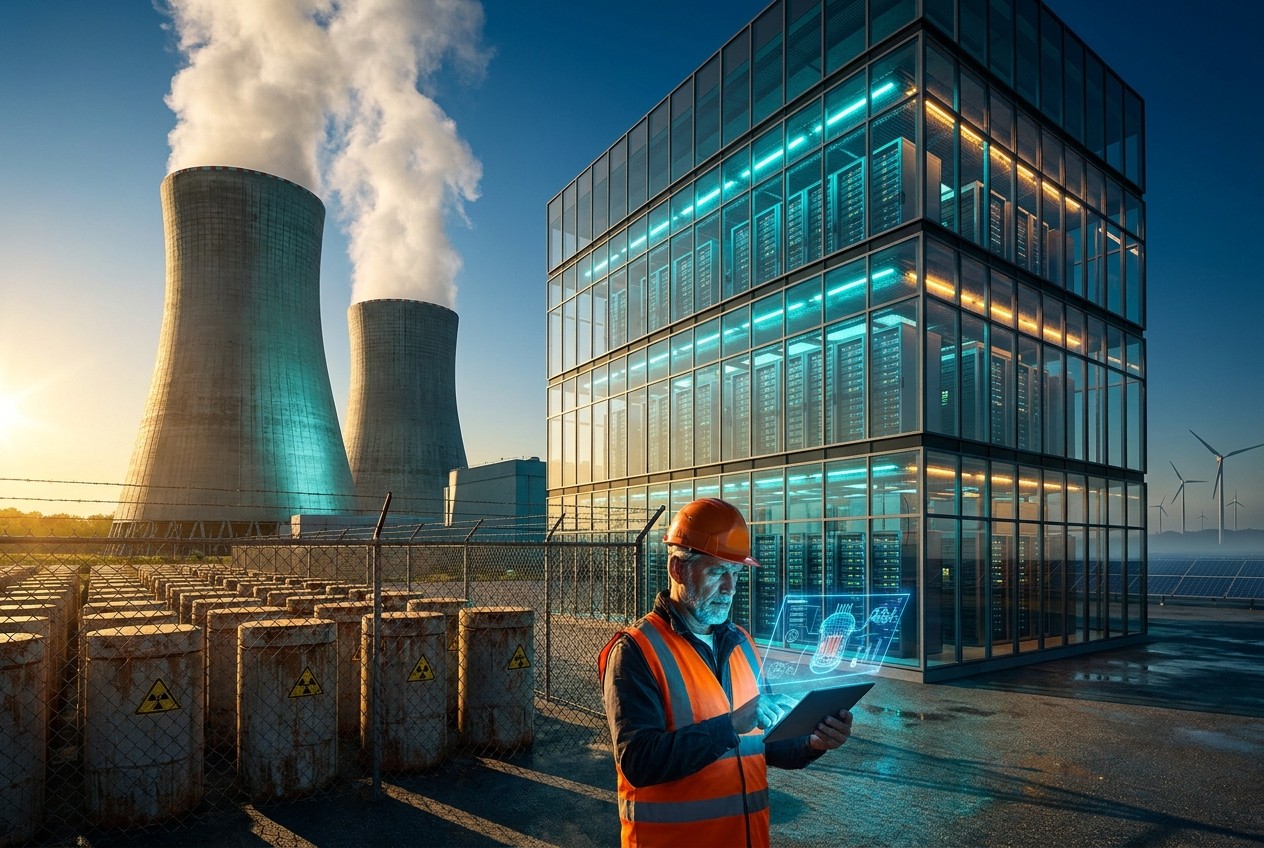
A North Carolina-based clean energy developer has announced plans to evaluate an advanced nuclear energy project in Amherst County, Virginia, that could provide up to 650 megawatts of power, according to the company and local reports. Geenex Power, headquartered in Charlotte, formally announced the proposal on October 6, 2026, according to a report by the global energy publication Cinie [1]. The facility, which the developer is calling “Beck Creek Energy,” would be built along the James River and could create more than 200 permanent jobs, according to the company’s announcement [2][3].
The project is targeted to begin operation in the early 2030s, according to statements from the developer [4]. The proposal marks one of the more ambitious advanced nuclear efforts announced in Virginia in recent years, and it comes as state and regional officials weigh how to meet rising electricity demand from data centers and other large power users.
Project Details and Reactor Technology
The proposed facility would use an advanced small modular reactor design, according to the developer’s public filings and local news reports [5]. The project is described as having a capacity of up to 650 megawatts, though the specific reactor technology and final design configuration have not been fully detailed in public statements [6]. Geenex Power describes the project as using advanced nuclear technology, a category that generally includes reactors designed with passive safety systems and modular construction techniques intended to reduce build times and costs.
Small modular reactors, or SMRs, are designed to generate between 50 and 500 megawatts of electricity, according to Appalachian Power, a Virginia utility also exploring the technology. The company states that SMRs could provide enough power for as many as 500,000 homes annually and have a smaller physical footprint than traditional nuclear or coal-fired plants [7]. The report linked the proposal to a possible 650 MW nuclear power plant in Virginia by the early 2030s [8].
Despite the ambitious timeline, the site and ownership structure have not been fully confirmed, and the project remains in early planning stages. A developer is proposing to build an advanced nuclear energy project in Amherst County that would provide up to 650 megawatts of power [9]. A separate study identified seven possible sites for a Virginia SMR, with advocates raising concerns that residents might be left out of early conversations about siting decisions [10].
Energy Demand and Data Centers Drive Interest
Virginia’s position as a global hub for cloud computing and artificial intelligence infrastructure has placed unprecedented strain on the regional power grid. The state’s data center corridor, concentrated in Northern Virginia, has driven electricity demand forecasts sharply higher in recent years, prompting utilities and policymakers to look at a range of new generation options.
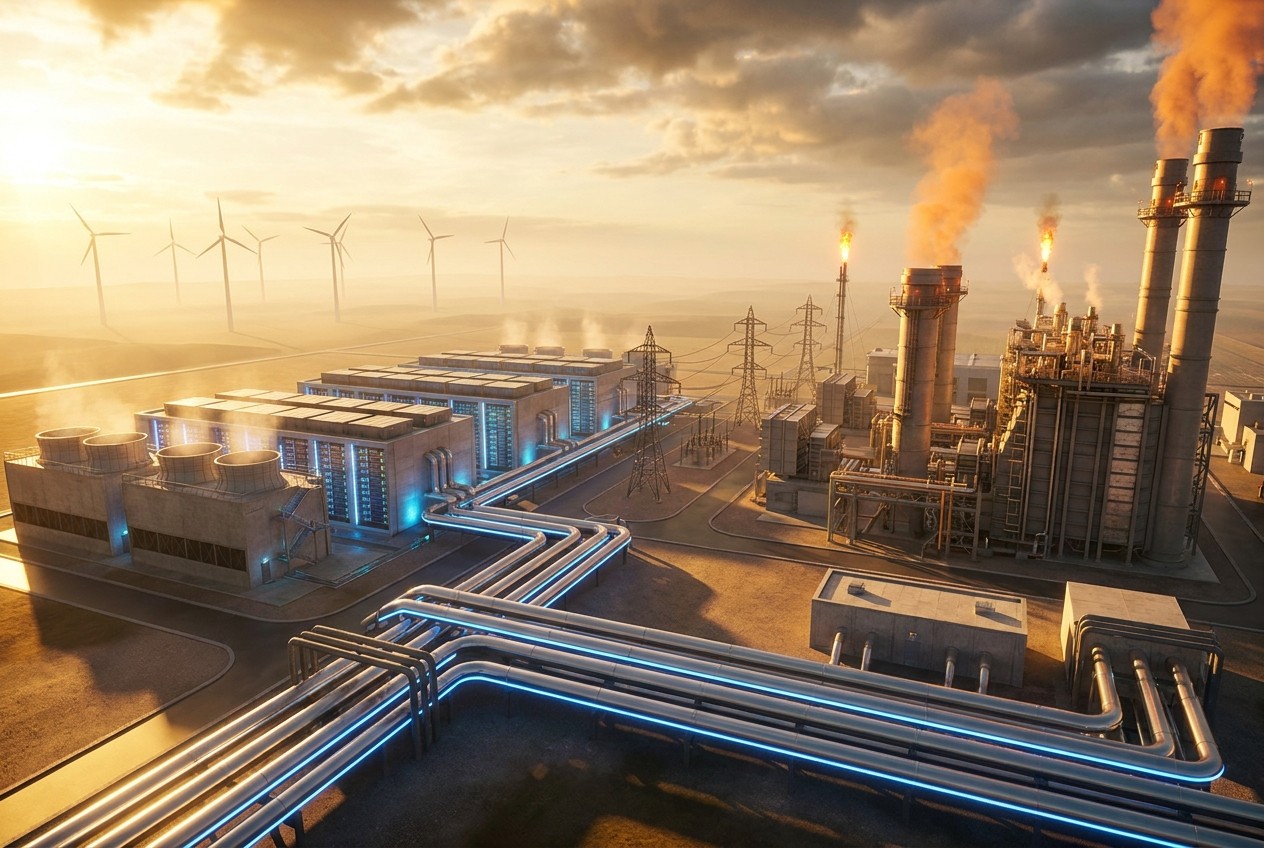
Utilities and state officials have said that nuclear power could help meet demand from artificial intelligence and cloud computing facilities. Dominion Energy has stated that it is developing an “all-of-the-above” mix of new power generation sources, including leading investments in offshore wind, solar, battery storage and natural gas, to reliably serve what it calls unprecedented growth [11]. Microsoft has turned to next-generation nuclear reactors, particularly small modular reactors, to power its data centers and AI projects, according to company statements [12].
Supporters of nuclear expansion argue that the technology provides reliable, low-emission electricity compared with intermittent renewable sources like wind and solar. Because nuclear plants can run continuously regardless of weather, they are often described as a potential complement to the growing share of variable renewable generation on the grid.
Regulatory, Safety, and Cost Considerations
The project would require licensing by the U.S. Nuclear Regulatory Commission, officials said, a process that can take years and involves extensive safety and environmental reviews. The NRC typically grants operating licenses for 40 years, and the agency has previously considered extending reactor operating lifetimes to 80 years, a move that critics have opposed on safety grounds [13].
Critics have cited cost overruns and unresolved waste storage issues at existing nuclear plants. Fully addressing the challenge of nuclear waste will take decades, according to energy analysts, though they note that it is not so urgent that it must be resolved before new plants are built. New designs for nuclear power plants make them safer, more efficient, and, in some cases, smaller, and these new reactor designs may provide a key breakthrough in both cost and scale, according to Robert Bryce, author of “Power Hungry” [14].
Proponents of advanced nuclear designs say they include passive safety features and reduced waste compared with older reactors. Countries worldwide rely on nuclear power due to its safety and reliability compared to other clean energy sources, and only about 1% of people’s radiation exposure comes from nuclear plants; the rest comes from natural sources like the sun and environmental radiation, according to Newt Gingrich in his book “To Save America” [15]. However, public skepticism remains, particularly in the wake of high-profile incidents. During the Fukushima disaster, General Electric constructed a massive nuclear facility along an active fault line prone to tidal waves and earthquakes, leading to a criticality event that threatened widespread disaster, according to investigative journalist Karl Grossman [16].
References
- US-based Geenex Power Unveils SMR Nuclear Plan for Amherst County …. https://en.cinie.net/article/66629.html
- US could get 650 MW nuclear power plant in Virginia …. https://interestingengineering.com/energy/650-mw-nuclear-plant-proposed-in-virginia
- Geenex Power proposes nuclear power plant in Amherst County. https://www.wsls.com/news/local/2026/10/14/amherst-nuclear-power/
- Geenex Power Proposes 650 MW Nuclear Project in Virginia. https://globalflowcontrol.com/newsroom/geenex-power-beck-creek-nuclear-project/
- Virginia’s first small nuclear reactor could be built in Amherst. https://virginiabusiness.com/virginias-first-small-nuclear-reactor-could-be-built-in-amherst/
- A company is proposing a new nuclear power generation …. https://www.instagram.com/reel/DefdTusFU5R/
- Appalachian Power – SMR | Appalachian Power – SMR. https://appalachianpowersmr.com/
- Small modular reactors could turn farmland into a power …. https://www.facebook.com/ieexplains/posts/small-modular-reactors-could-turn-farmland-into-a-power-source/1534015798769454/
- Developer uses public comment period at Amherst County …. https://cardinalnews.org/2026/10/06/developer-proposes-nuclear-power-project-in-amherst-county/
- Advocates worry residents are being left out of conversations about …. https://cardinalnews.org/2023/10/24/advocates-worry-residents-are-being-left-out-of-conversations-about-where-to-build-virginias-first-small-nuclear-reactor/
- Dominion Energy Newsroom – Dominion Energy and Amazon to explore …. https://news.dominionenergy.com/press-releases/press-releases/2024/Dominion-Energy-and-Amazon-to-explore-advancement-of-Small-Modular-Reactor-SMR-nuclear-development-in-Virginia-10-16-2024/default.aspx
- Microsoft turning to NUCLEAR ENERGY to power its future data centers and AI projects – NaturalNews.com, January 16, 2025.
- NRC increases the risk of Fukushima-like US disaster by extending life of reactors to 80 years – NaturalNews.com, December 01, 2015.
- Power Hungry The Myths of Green Energy and the Real Fuels of the Future by Robert Bryce
- To Save America by Newt Gingrich
- Mike Adams interview with Karl Grossman – September 23 2022 by Mike Adams
- Health Ranger Report – data center sabotage – Mike Adams – Brighteon.com, August 20, 2025.
- Global Nuclear Fusion Investments Reach Record $4.48 Billion in 2025 – NaturalNews.com, July 20, 2026.
- Westinghouse announces 10 new AP1000 nuclear reactors for US energy grid by 2030 – NaturalNews.com, July 16, 2025.
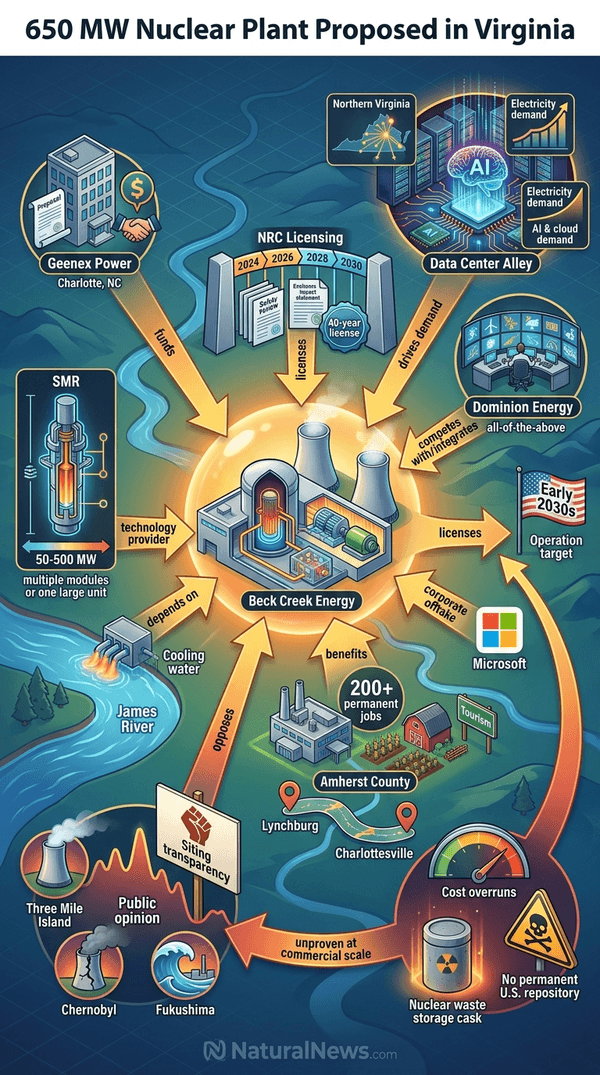
Explainer Infographic
Submit a correction >>
Tagged Under:
artificial intelligence, big government, computing, data centers, electricity, energy supply, future tech, green energy, green living, information technology, national security, nuclear, nuclear power, power, power grid, power plant, progress, supply chain, Virginia
This article may contain statements that reflect the opinion of the author
RECENT NEWS & ARTICLES